RacesColorado Rockies
High Lonesome 100
Demand
5 out of 5
How much it asks
Worth
5 out of 5
Whether the ticket is worth it
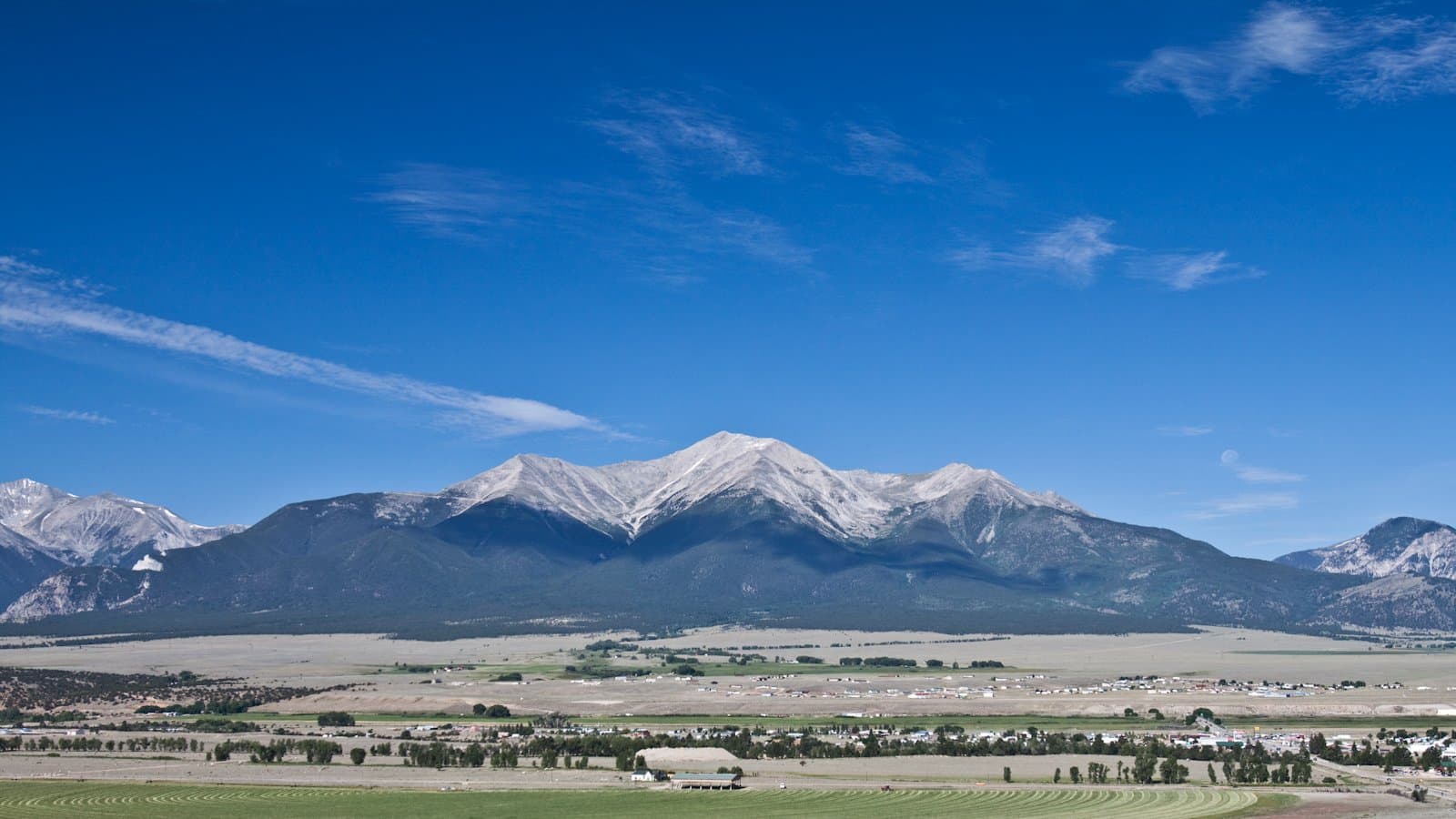
Mount Princeton / Salida, Colorado, United States
Scorecard · is it worth it?
Worth the trip if the mountains match what you want.
The card
High Lonesome is the race we would tell a friend to fly for if the friend wanted Colorado mountains and did not have a Hardrock ticket. That is a worth score of 5, and it is the point of this site. The loop starts at the base of Mount Princeton, runs the southern Sawatch, uses 27 miles of the Continental Divide Trail and 35 miles of the Colorado Trail, crosses five alpine passes, and threads two ghost towns. Published demand: 100 miles, 23,500 feet of gain, high point 13,150 feet, about 15 percent above treeline, 37 hours. That is a mountain 100. It is not Ouray's vertical prank and it is not Leadville's dirt-road myth.
Demand is 5 because 13,000-foot passes, 23,500 feet of gain, storms, and true trail stack. The Colorado Trail sections give you flow; they do not make this a runnable road 100. Worth is 5 because the weekend is the mountains. Salida is a real town. The aid stations are captained by 100-mile veterans. The registration culture is the opposite of a circuit: qualifiers explicitly disallow UTMB-owned races. That is an editorial fact, not a vibe.
Organization confidence is high. The course pages, crew manuals, qualifier rules, and lottery mechanics are written like they expect to be read. A race that publishes like a community is not the same as a race that publishes like a brand.
Lottery is real. You should not pretend this is a secret. You should also not confuse a Colorado lottery with a stones economy. If you get in, go. If you do not, Ouray is the nastier nearby option and Hardrock is the icon. Leadville remains the wrong answer to the same mountain question.
Who it is for
Runners who want a true Colorado mountain 100 with community aid, alpine trail, and no World Series affiliation.
Who should skip
People who need a household-name buckle, or who cannot handle 13,000-foot passes and a competitive lottery.
Elevation
Tap or hover for miles, clock, and aidft
Dark from 20:28 to 05:52 local. The median finisher is in the dark from Lost Wonder onward (11:06pm).
Bottom ticks are aid. Longest gap 9.6 mi.
Finisher pace
Not yet sourced.
Where the cutoff bites
Least margin: Raspberry 1, 60 min for the back of the field.
Finishers only. DNFs are missing, so the real back of the field is slower.
Hardest stretch
Hardest stretch: Raspberry 1 to Antero, 4,176 ft in 9.6 mi.
Segment gains from the course elev profile.
| From | To | Mi | Gain | Loss |
|---|---|---|---|---|
| Start | Raspberry 1 | 7.311.7 km | 1,146 ft349 m | 757 ft231 m |
| Raspberry 1 | Antero | 9.615.4 km | 4,176 ft1,273 m | 1,483 ft452 m |
| Antero | St Elmo 1 | 8.213.2 km | 742 ft226 m | 2,283 ft696 m |
| St Elmo 1 | Cottonwood | 6.410.3 km | 2,175 ft663 m | 1,996 ft608 m |
| Cottonwood | St Elmo 2 | 6.410.3 km | 1,955 ft596 m | 2,050 ft625 m |
| St Elmo 2 | Tin Cup | 3.86.1 km | 920 ft280 m | 0 ft0 m |
| Tin Cup | Hancock | 7.912.7 km | 1,353 ft412 m | 1,322 ft403 m |
| Hancock | Lost Wonder | 6.410.3 km | 999 ft304 m | 1,326 ft404 m |
| Lost Wonder | Purgatory | 8.313.4 km | 2,090 ft637 m | 1,316 ft401 m |
| Purgatory | Monarch Pass | 3.96.3 km | 522 ft159 m | 620 ft189 m |
| Monarch Pass | Fooses Creek | 6.911.1 km | 130 ft40 m | 2,777 ft846 m |
| Fooses Creek | Shavano | 6.410.3 km | 1,420 ft433 m | 663 ft202 m |
| Shavano | Blanks Cabin | 1.93.1 km | 311 ft95 m | 49 ft15 m |
| Blanks Cabin | Raspberry 2 | 9.315 km | 874 ft266 m | 1,759 ft536 m |
| Raspberry 2 | Finish | 7.311.7 km | 718 ft219 m | 1,131 ft345 m |
- Start
- 8,550 ft2,606 m
- Finish
- 8,550 ft2,606 m
- Net
- 0 ft0 m
- Longest climb
- 4,213 ft1,284 m
- Above 10,000 ft
- 58 mi93 km
Start and finish are within 400 ft. Treat net as a loop.
Weekend
Official handbook facts
- Start
- 06:00
- Crew
- 31, 49.6 mi
- Pacer from
- 49.6 mi
- Kit
- Required · Whistle, bivy, 1.5 L, emergency light, taped-seam jacket, cup. Gear check Friday 5:00-5:45 AM (not the gun).
- Tracker
- Open
- Course file
- Open
High Lonesome 100 2026 race-week page + Runner Guide v3 · retrieved 2026-09-06 (repo record)
Required kit
2026 edition · RD list
Whistle
Base required gear, start to finish.
Emergency bivvy
SOL emergency bivvy.
Base required gear, start to finish.
Water capacity
Minimum 1.5L.
Base required gear, start to finish.
Emergency light source
At least 10 lumens.
Base required gear, start to finish.
Waterproof jacket
Must have taped seams.
Base required gear, start to finish.
Collapsible cup
Base required gear, start to finish.
Pants
Leggings, tights, running pants, or waterproof options are all acceptable.
Divide gear, required only from Cottonwood to Monarch.
Two light sources
Primary plus emergency light.
Divide gear, required only from Cottonwood to Monarch.
Beanie or buff
Divide gear, required only from Cottonwood to Monarch.
Extra layer
Long sleeve T-shirt or greater. No cotton.
Divide gear, required only from Cottonwood to Monarch.
CORSAR card
Proof required at packet pickup.
Not necessarily carried during the race itself.
Runners are checked at the Start Line (Friday 5:00am-5:45am), Cottonwood (mile 31), and Hancock (mile 49). Pacers are checked at their pickup location only; a pacer starting at Hancock is checked there but not at subsequent aid stations.
highlonesome100.comretrieved 2026-09-06
Field
Last editions · 100M scored distance
Field evidence: who showed up, who finished, how long. DNF is that evidence, not a difficulty score. Public results, scored distance only.
DNF over the years
DNF 28% in 2026, 26% the year before.
2026
- Starters
- 250
- Finishers
- 180
- DNF
- 28%
- Win
- 19:56:30
- Median
- 32:38:45
2025
- Starters
- 225
- Finishers
- 166
- DNF
- 26%
- Win
- 18:52:00
- Median
- 32:45:10
2024
- Starters
- 199
- Finishers
- 143
- DNF
- 28%
- Win
- 20:16:25
- Median
- 33:16:15
2023
Finishers from UltraRunning Magazine calendar results table (100 Miles). Starters/DNF not published on this page.
- Starters
- .
- Finishers
- 125
- DNF
- –
- Win
- 19:42:03
- Median
- .
2022
Finishers from UltraRunning Magazine calendar results table (100 Miles). Starters/DNF not published on this page.
- Starters
- .
- Finishers
- 96
- DNF
- –
- Win
- 20:58:57
- Median
- .
2021
Finishers from UltraRunning Magazine calendar results table (100 Miles). Starters/DNF not published on this page.
- Starters
- .
- Finishers
- 94
- DNF
- –
- Win
- 21:23:00
- Median
- .
2019
Finishers from UltraRunning Magazine calendar results table (100 Miles). Starters/DNF not published on this page.
- Starters
- .
- Finishers
- 86
- DNF
- –
- Win
- 22:22:43
- Median
- .
2018
Finishers from UltraRunning Magazine calendar results table (100 Miles). Starters/DNF not published on this page.
- Starters
- .
- Finishers
- 67
- DNF
- –
- Win
- 21:02:59
- Median
- .
2017
Finishers from UltraRunning Magazine calendar results table (100 Miles). Starters/DNF not published on this page.
- Starters
- .
- Finishers
- 53
- DNF
- –
- Win
- 23:29:05
- Median
- .
Latest median 32:38:45 (2026) vs the 37-hour cutoff already listed in Gate. Not a hardness score.
Overall field only. Not a pro or sponsored subset.
Where people drop
DNF by last recorded station · 2025. 225 starters.
- Raspberry 1 (mi 7.3)0
- Skyline (mi 14.7)0
- Antero (mi 16.9)0
- Baldwin (mi 21.1)0
- St Elmo 1 (mi 25.1)2
- Cottonwood (mi 31.5)6
- St Elmo 2 (mi 37.9)3
- Tin Cup (mi 41.7)0
- Hancock (mi 49.6)12
- Lost Wonder (mi 56)9
- Purgatory (mi 64.3)3
- Monarch Pass (mi 68.2)8
- Fooses Creek (mi 75.1)1
- Shavano (mi 81.5)4
- Blanks Cabin (mi 83.4)5
- Raspberry 2 (mi 92.7)6
- Finish (mi 100)0
Most drops: Hancock, 12 of 225 in 2025
OpenSplitTime 2025 dropped last-station countsretrieved 2026-09-07
Climate
Typical July at the start area · historical race-week weather
- Typical high
- 54°F (12°C)
- Typical low
- 34°F (1°C)
- Typical precip
- 4.9 in (126 mm) / July
- Days with rain
- 67% of days
- High point
- 13,150 ft (4,008 m)
BewareHigh point 13,150 ft (4,008 m). Measurable precip on about 67% of July days.
2015–2024 July means at the start / massif. · Open-Meteo ERA5 / climate · retrieved 2026-09-06 (repo record)
Dimensions
Ten 1–5 scores with a one-line why. Organization has a separate confidence tag.
Supporting dimensions · organization confidence high
A 100-mile loop with a 37-hour cutoff: tighter than Ouray, kinder than a 30-hour road 100.
23,500 ft of gain. Enough to be a mountain race, not a 42k-ft suffering contest.
Alpine passes, CDT and Colorado Trail, basins and ridges. Trail, not jeep boulevard.
Sawatch summer: storms, cold nights, sun. Fifteen percent above treeline.
High point 13,150 ft, average around 10,600. The air is part of the course.
Salida / Mount Princeton is easier than Silverton, still a mountain-town weekend. Lottery plus qualifiers.
Respected Colorado mountain 100, not a global final. Community is the prestige.
Veteran-captained aid, unusually public course docs, qualifier rules that refuse UTMB-owned races.
Hard to name a better flight-to-trail ratio in the U.S. if you can get through the lottery.
Five alpine passes, two ghost towns, CDT and CT. This is the postcard without the circus.
| Dimension | Score | Why |
|---|---|---|
Distance & format How much does the advertised distance and format actually ask? | 4 out of 5 | A 100-mile loop with a 37-hour cutoff: tighter than Ouray, kinder than a 30-hour road 100. |
Vertical How serious is the climbing, not just the mile marker? | 4 out of 5 | 23,500 ft of gain. Enough to be a mountain race, not a 42k-ft suffering contest. |
Technicality Hands, poles, route-finding, or just a long dirt road? | 4 out of 5 | Alpine passes, CDT and Colorado Trail, basins and ridges. Trail, not jeep boulevard. |
Climate Heat, monsoon, ice, or a friendly summer afternoon? | 4 out of 5 | Sawatch summer: storms, cold nights, sun. Fifteen percent above treeline. |
Altitude Does the air change the race, or is it a talking point? | 4 out of 5 | High point 13,150 ft, average around 10,600. The air is part of the course. |
Logistics How hard is the weekend around the race: travel, crew, lodging, rules? | 3 out of 5 | Salida / Mount Princeton is easier than Silverton, still a mountain-town weekend. Lottery plus qualifiers. |
Prestige & field Does the start list and history change what the weekend feels like? | 3 out of 5 | Respected Colorado mountain 100, not a global final. Community is the prestige. |
Organization From public evidence, does the event look competently run? | 5 out of 5 | Veteran-captained aid, unusually public course docs, qualifier rules that refuse UTMB-owned races. |
Value Entry fee, travel tax, and lottery friction versus what you get on course. | 5 out of 5 | Hard to name a better flight-to-trail ratio in the U.S. if you can get through the lottery. |
Adventure & scenery Would you fly for the place even if nobody kept score? | 5 out of 5 | Five alpine passes, two ghost towns, CDT and CT. This is the postcard without the circus. |